Yacht & Marine Interiors

Designed for the realities of life at sea, movement, exposure, and comfort.

We’re a furniture production, FF&E procurement partner and interior design studio, trusted by designers, developers, and hospitality teams across Europe and the U.S.

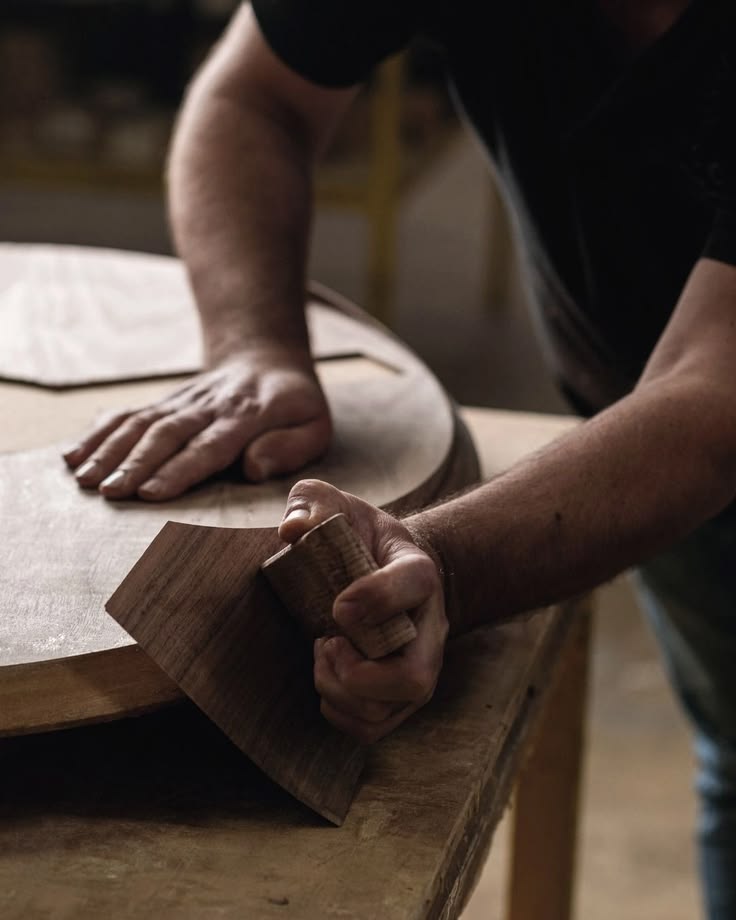
With years of hands-on manufacturing expertise and an in-house team, we deliver made-to-measure FF&E solutions, combining craftsmanship, scale, and flexibility.

Marine conditions require materials that remain stable over time

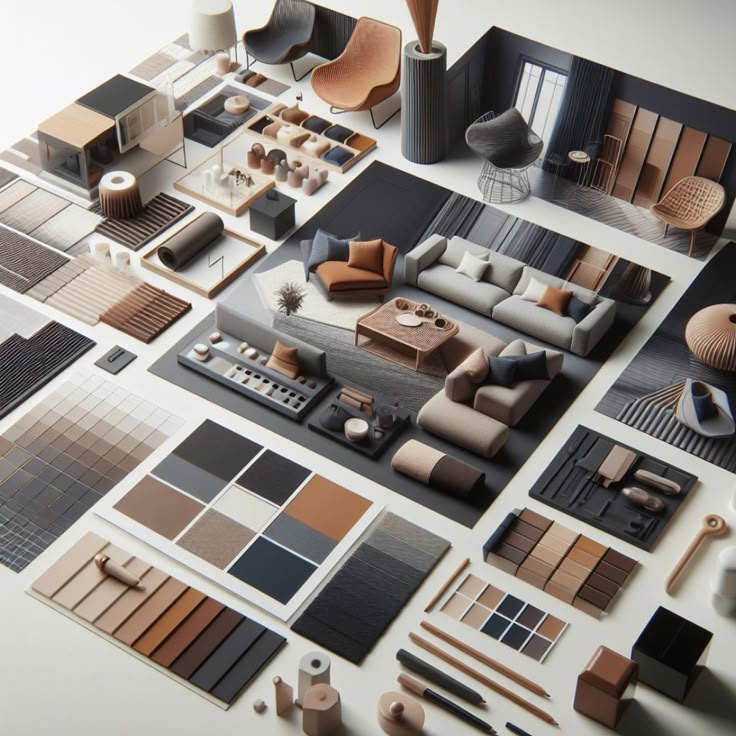
Choosing the right materials

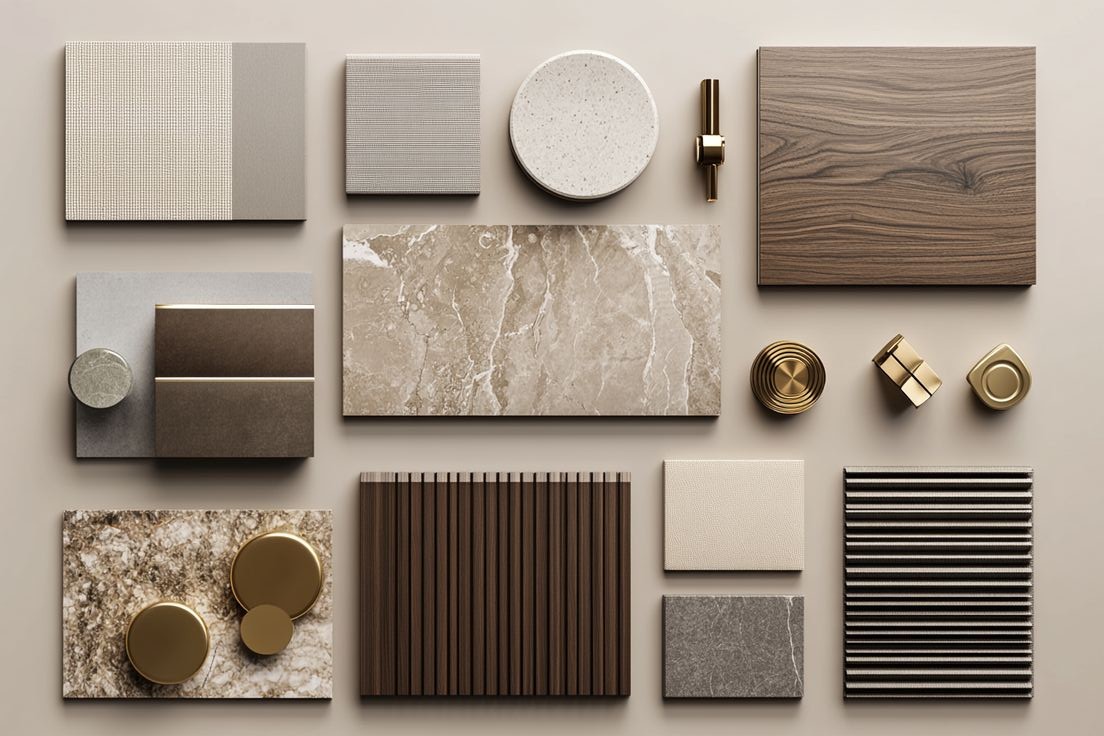
Material decisions define longevity, in marine environments, failure rarely happens immediately; it occurs progressively through constant climate exposure, humidity, salt, and movement.

Responsive Comparison Table
Component Recommended Option Compared To Why It Performs Better in Marine Conditions
Structural panels & cabinetry Marine plywood (BS1088 standard) Standard plywood Manufactured with waterproof phenolic glue lines and minimal internal voids, reducing risk of delamination, swelling, and mould formation under sustained humidity exposure.
Decking surfaces Solid teak (Tectona grandis) Synthetic teak Natural oil content slows moisture absorption and reduces fungal growth when maintained correctly. Synthetic teak reduces maintenance but may expand more under high sun exposure and can retain surface heat.
Hardware & fixings Marine-grade stainless steel (AISI 316 / A4) Untreated steel or 304 steel Higher molybdenum content improves resistance to chloride corrosion from salt air. Reduces rust staining, structural weakening, and seized fixings over time.
Upholstery & soft finishes Solution-dyed acrylic fabrics (Sunbrella®, Tempotest®) Residential upholstery textiles UV-stable fibres resist colour degradation and maintain strength under prolonged sun exposure. Breathable structure reduces moisture retention, limiting mould growth in enclosed cabins.
Cushions & padding Closed-cell foam (Dryfast®, reticulated foam) Standard polyurethane foam Allows water drainage and faster drying, reducing internal moisture accumulation that leads to mould and odour.
Flooring substrates Fiberglass-reinforced panels or closed-cell composite boards MDF or particle board Non-absorbent structure prevents swelling and structural breakdown when exposed to condensation or occasional water exposure.
Adhesives & sealants Marine-grade epoxy or polyurethane adhesives (West System®, Sikaflex® marine range) Standard construction adhesives Maintains bond integrity under vibration, thermal movement, and humidity variation. Reduces risk of joint failure.
Countertops & wet surfaces Solid surface (Corian®) or sealed stone with epoxy treatment Unsealed porous stone Reduced moisture absorption and improved resistance to microbial growth in high humidity zones such as heads and galleys.
Hinges & moving hardware Corrosion-rated concealed hinges (Blum INOX, Häfele Marine Line) Standard interior hinges Designed to maintain smooth movement despite salt exposure, condensation, and constant vibration.

XXX

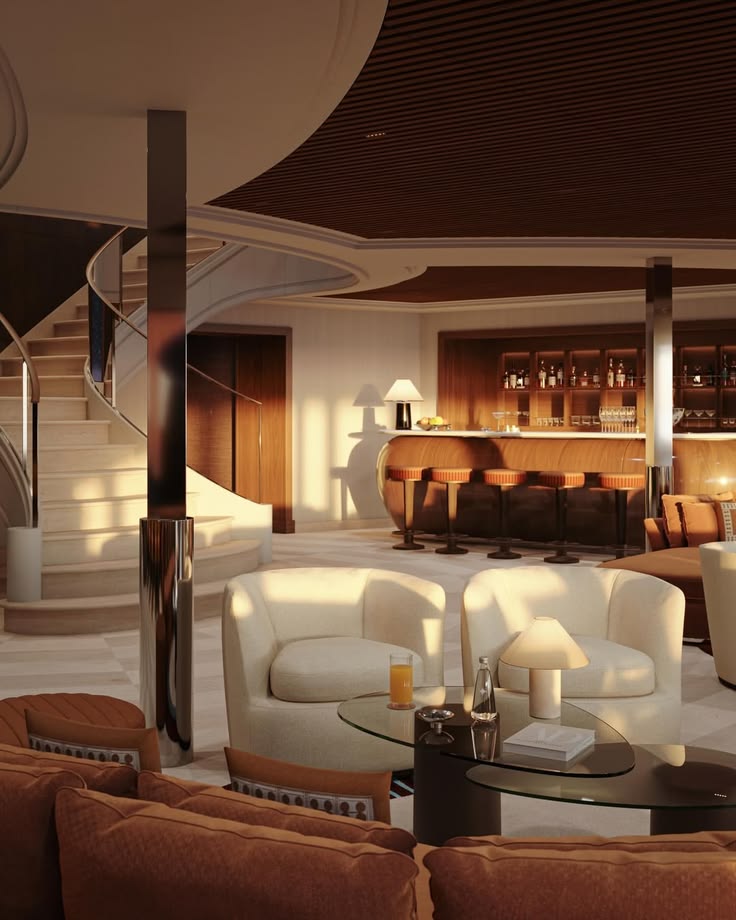
MAIN SALOON

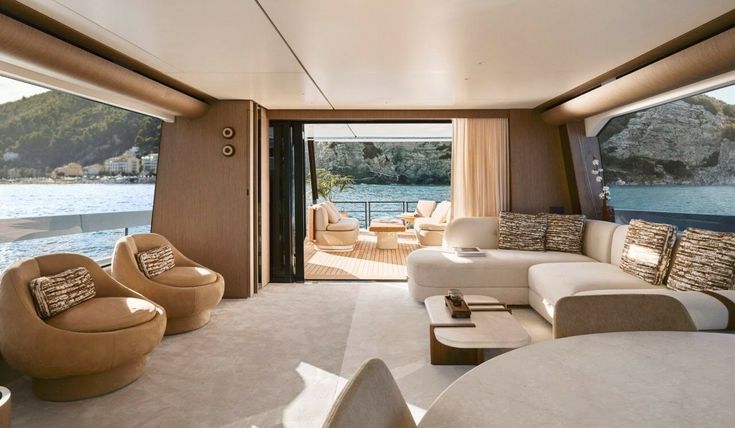
Fixed seating integrated into the hull structure to maintain stability during movement. Upholstery fabrics selected for resistance to humidity and salt exposure.

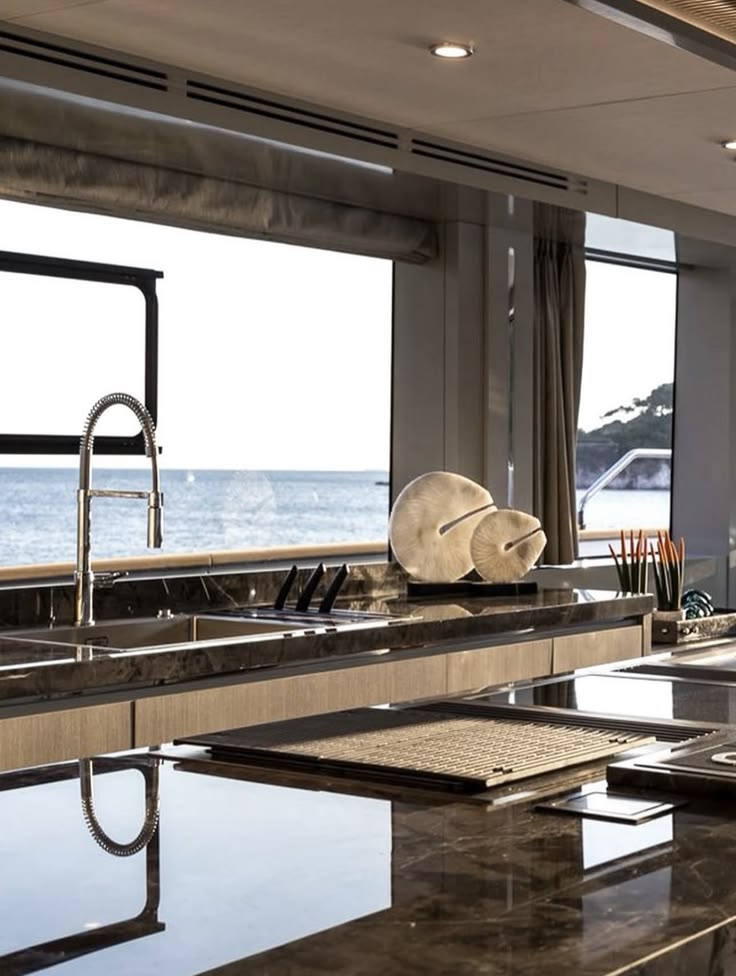
GALLEY KITCHEN

Compact layouts prioritise safe circulation between appliances. Marine-grade fittings and secure cabinetry prevent movement during navigation.

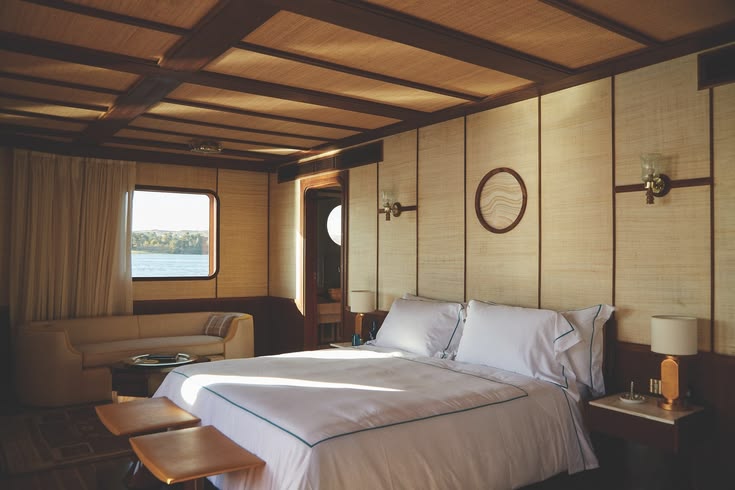
CABINS

Joinery designed to follow hull curvature, maximising usable space without creating collision points. Storage often integrated under beds and seating.

BATHROOMS (HEADS)

Moisture-resistant materials and sealed edges prevent swelling over time. Fixtures selected for reduced water consumption and stable pressure performance.

BUILT-IN STORAGE

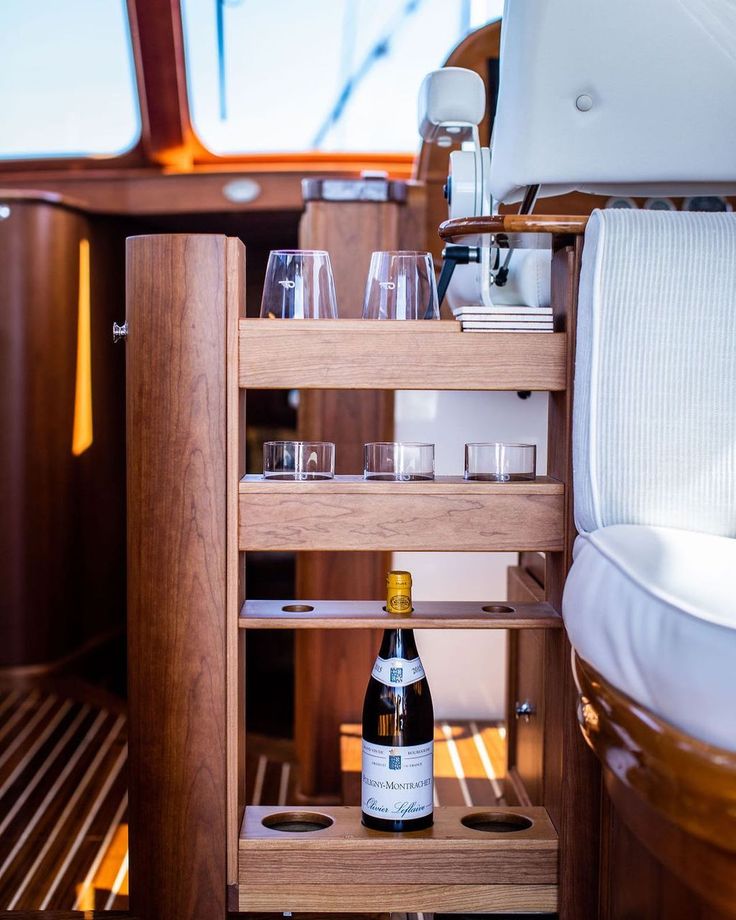
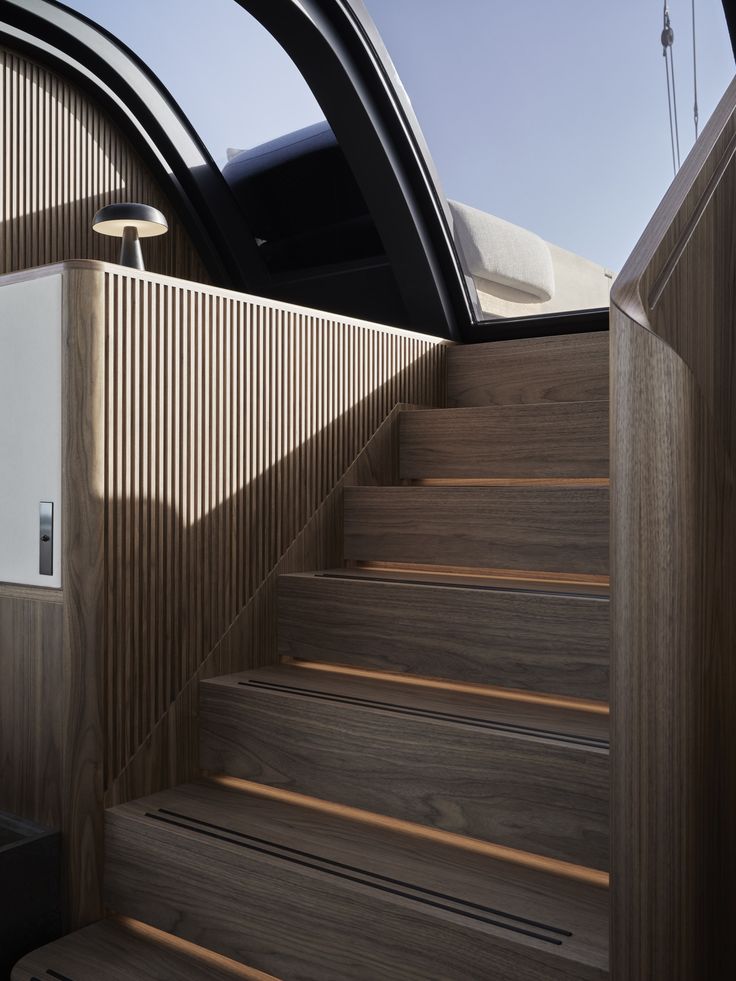
Storage integrated into walls, steps, and seating to maintain clear walkways. Latch systems prevent opening during movement.

DINING AREA

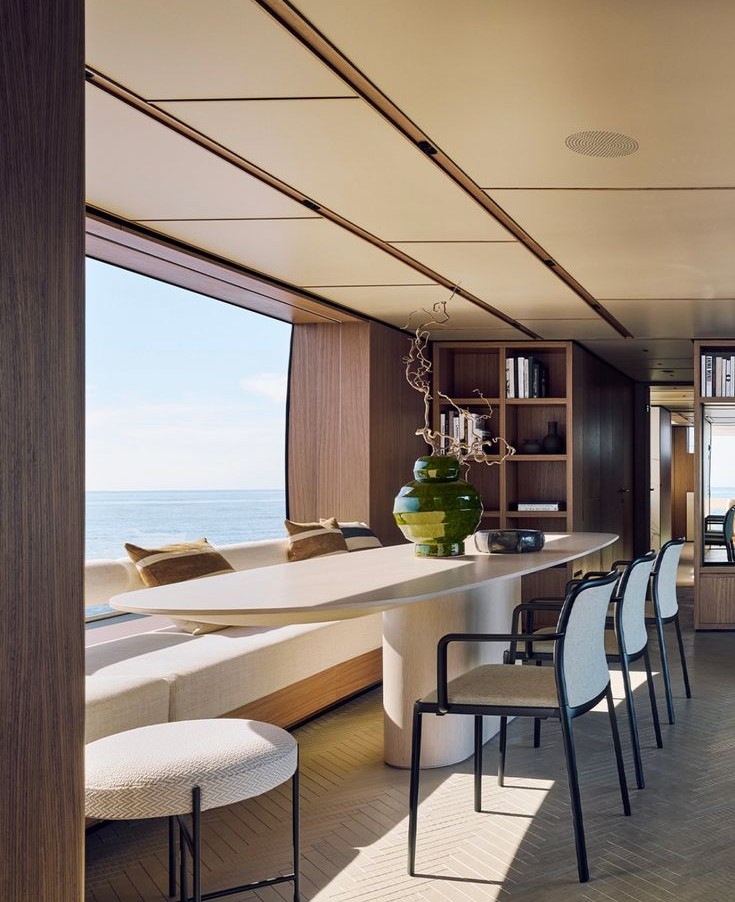
Fixed table systems improve stability. Rounded edges reduce risk of impact when navigating in motion.

NAVIGATION STATION

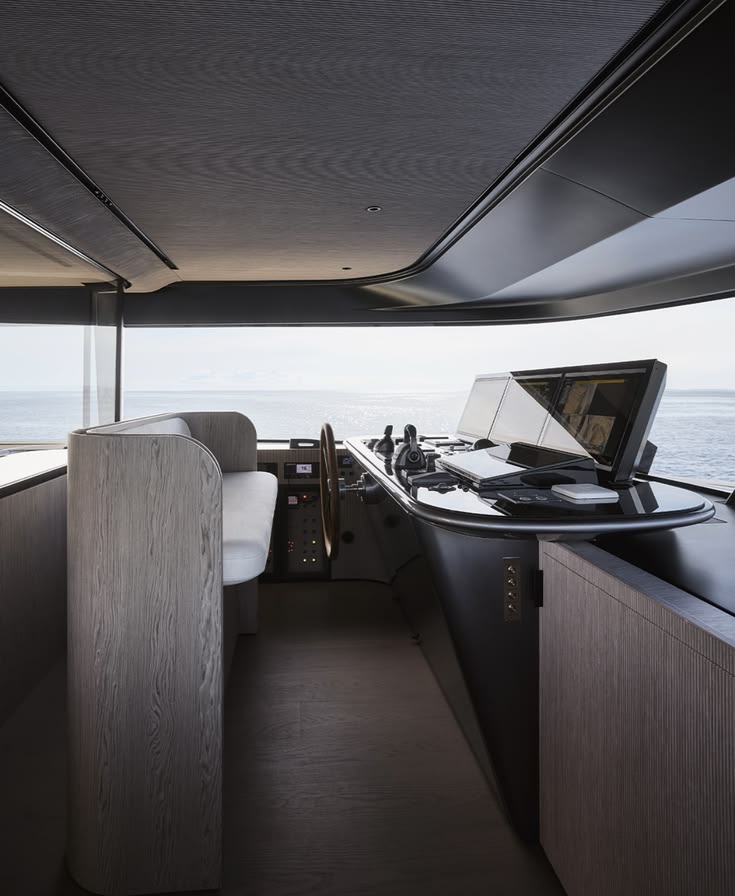
Positioned with clear visibility and access to technical systems. Cable management and ventilation considered early in design.

LIGHTING SYSTEM

Low-profile fixtures minimise visual clutter and reduce collision risk. Warm LED temperatures commonly used for evening navigation comfort.

FLOORING

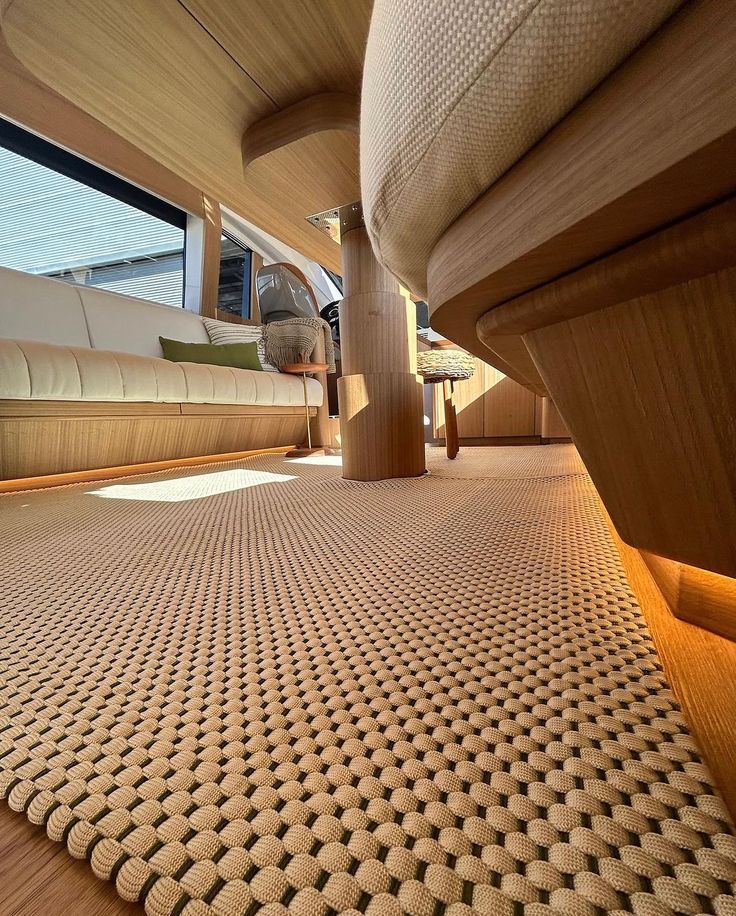
Non-slip surfaces improve safety when moving between zones. Materials selected for dimensional stability under humidity variation.

CUSTOM PLANNING

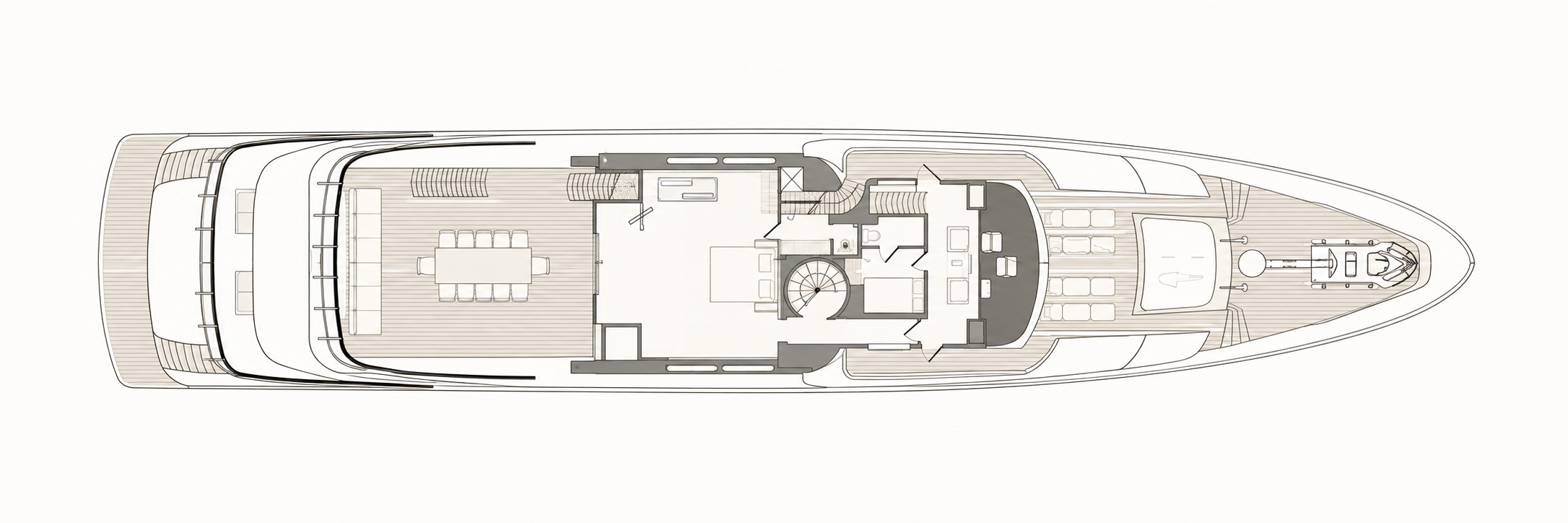
Marine interiors require coordination between structure, technical systems, and joinery. Electrical routing, ventilation paths, and service access must be considered before finalising layouts.Apartments and large residences allow tolerance for dimensional adjustments. Marine environments allow less flexibility. Early planning helps avoid conflicts between structural ribs, equipment placement, and usable circulation width.

Ready to plan a layout that works reliably within marine constraints?

INSIGHTS ON MARINE INTERIORS

Looks like this section needs a little design magic. Stay tuned!

Frequently Asked Questions

Everything you need to know about Valecasa’s services, materials, and production.
Can residential furniture be used on yachts?
+ circle
Loose furniture is generally limited. Fixed joinery improves stability and reduces movement during navigation.
Are special materials required?
+ circle
Yes. Materials must tolerate humidity, salt exposure, and temperature variation without warping or corrosion.
Can layouts be customised for small vessels?
+ circle
Yes, but circulation width and storage integration become more critical.
Do curved walls limit design options?
+ circle
They influence joinery design but often create opportunities for integrated storage.
Is weight an important consideration?
+ circle
Yes. Material selection affects performance and fuel efficiency.
Can stone surfaces be used?
+ circle
Yes, but thickness and fixing methods must be adapted for marine use.
How early should interior planning begin?
+ circle
Ideally during technical layout development to coordinate structure, electrical routing, and plumbing.
Can existing yachts be refurbished?
+ circle
Yes. Site measurement and technical assessment determine which elements can be retained.
Are standard kitchen appliances suitable?
+ circle
Some can be used, but marine-rated alternatives are often recommended for safety and durability.
Do you coordinate with shipbuilders or naval architects?
+ circle
Yes. Coordination ensures structural constraints and service routes are respected.
© 2015-2026 Valecasa. All rights reserved. Designed and developed by Bykarya.
We acknowledge the Traditional Owners of the land where we work and create—the Javanese people—and honor the artisans of Jepara, whose craftsmanship has been passed down through generations. We pay our respects to their heritage, culture, and traditions, celebrating the stories and skills that continue to shape the soul of Indonesian woodworking.